


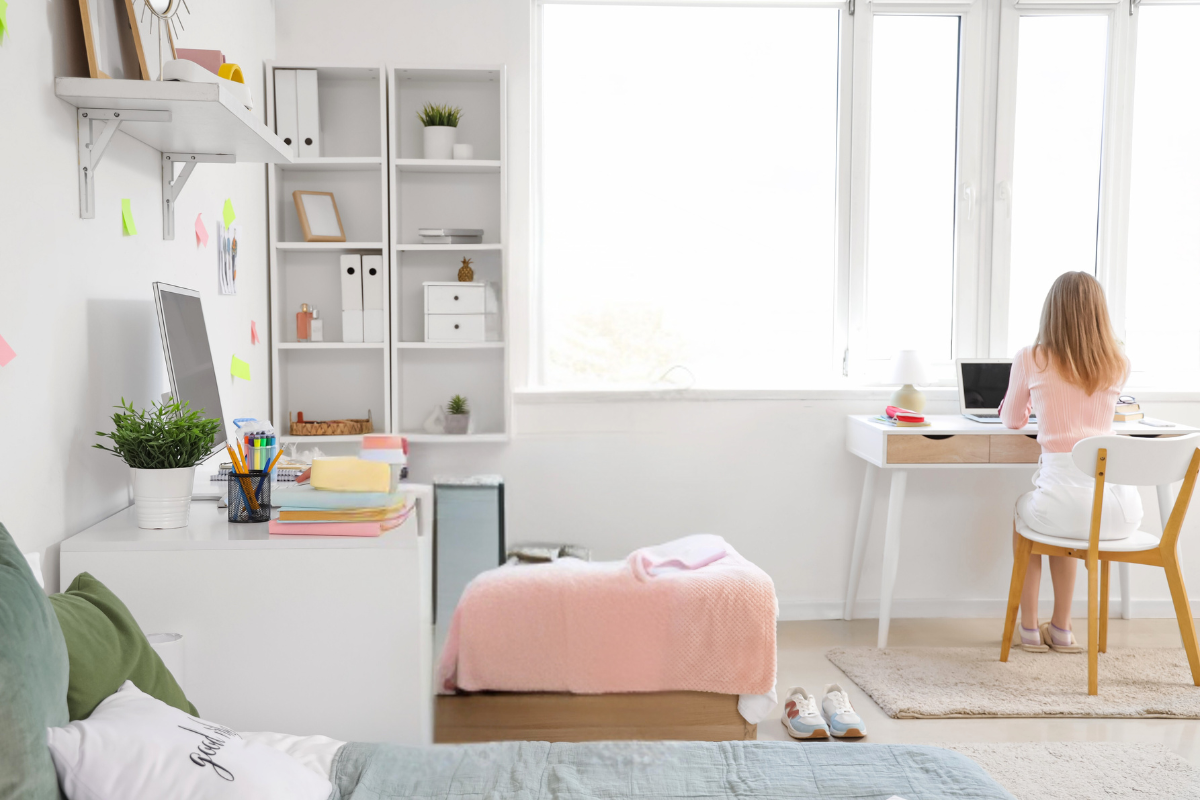
Sending a child to college brings a long list of decisions with it. What should go, what should stay home, what will actually fit in the dorm, and how everything will come together once you arrive on campus.
For families balancing work, travel, and full schedules, managing those details can quickly become another significant project. At Ethereal Edits, we help families thoughtfully edit, pack, and organize what their student needs so the transition feels more considered from the beginning.
It’s the same principle behind our Move Concierge service: deciding what belongs in the next space before thoughtfully planning how it will function once you arrive.
A Transition for the Whole Family
Sending a child to college is a meaningful transition for the entire household.
Alongside the excitement, there are dozens of practical decisions to make. Clothing needs to be edited. School requirements need to be considered. Dorm dimensions matter. Belongings need to be packed in a way that makes sense at the other end.
Our role is to help simplify those decisions so parents aren’t carrying every logistical detail themselves.
Rather than beginning with a generic dorm checklist, we start with the student. What will their days actually look like? What do they genuinely use? What does the school provide? How much storage will they have?
Those answers help determine what belongs in the room and, just as importantly, what can stay home.

What Belongs in the Dorm
Dorm rooms come with very real space limitations, which makes thoughtful editing especially important.
The goal isn’t to send as little as possible. It’s to bring what will genuinely support daily life on campus without filling the room with items that are unlikely to be used.
Depending on the student and the school, that may include:
- Twin XL bedding, pillows, and a comforter
- Under-bed or closet storage appropriate for the room
- A laundry hamper or laundry bag
- Towels, a shower caddy, and bathroom essentials
- Everyday desk and study supplies
- Approved electrical items and a power strip
- A few personal pieces that make the room feel familiar
- Basic cleaning supplies
- Clothing selected for the season, climate, and student’s actual routine
Before buying organizing products, we recommend confirming the school’s room dimensions, furniture, appliance policies, and other residential guidelines.
The system should come after the reality of the space is understood.
Edit Before You Pack
One of the most useful things a student can do before college is edit their belongings before anything goes into a box.
This is particularly valuable with clothing.
College is often the first time a student is managing a much smaller wardrobe in a much smaller closet. Bringing pieces that no longer fit, aren’t worn, or don’t reflect how they dress today only makes that limited space harder to manage.
We work through belongings by category and determine what will genuinely serve the student in this next season.
That may mean keeping favorite everyday pieces within the college wardrobe, leaving special-occasion or off-season clothing at home, and passing along things they’ve already outgrown.
The same applies to books, personal care products, desk supplies, décor, and everything else competing for space.
If your family is already beginning the editing process for an upcoming transition, 10 Things to Throw Away Before You Move is another useful article to revisit before packing begins.
How We Prepare for College Move-In
Every student has different routines, preferences, and campus requirements. We begin by understanding those details, then guide the editing, packing, and organizing process accordingly.
Depending on the project, that can include:
- Reviewing what will make the move and what will remain at home
- Organizing belongings into clear categories
- Creating a checklist around the student’s needs and school requirements
- Planning storage based on the available space
- Packing categories together so setup is easier at the other end
- Labeling belongings clearly for move-in
- Identifying anything that still needs to be sourced before arrival
Packing with the setup in mind makes a significant difference.
Instead of opening boxes filled with unrelated items once you arrive, categories can move directly to the area where they belong. Bedding goes to the bed. Desk supplies go to the study zone. Clothing moves directly into the wardrobe.
It reduces unnecessary decisions during an already full day.
For a closer look at how this philosophy applies to larger household transitions, you can also read How a Move Concierge Saves You Time, Stress, and $$$.

Setting Up a Dorm That Supports Daily Life
Dorm setup is about more than getting belongings out of boxes.
A thoughtful layout can make studying, getting dressed, doing laundry, and resetting the room easier from the first week.
We look at the room through the student’s actual routines and create clear zones within the available footprint.
Sleeping
Bedding and nighttime essentials should be simple to access without taking over the room. If the bed provides usable storage underneath, that space can hold less frequently used categories rather than everyday belongings.
Getting Dressed
The wardrobe should make frequently worn clothing easy to see and reach.
This is where editing before move-in becomes especially valuable. When the closet contains what the student actually wears, getting dressed requires less searching and the space is easier to maintain.
Studying
The desk should support studying, not become overflow storage for everything else in the room.
Everyday supplies can stay accessible while backup items are stored elsewhere. A clear work surface gives the student a defined place to focus without having to reset the entire room first.
Everyday Essentials
Small dorm rooms work best when frequently used items have obvious homes.
Laundry, toiletries, chargers, bags, and school supplies should be placed where they naturally fit into the student’s routine. The easier a system is to understand, the easier it is to maintain.
Create a Room They Can Reset Themselves
The real measure of a successful dorm setup isn’t how it looks on move-in day.
It’s whether the student can maintain it once everyone goes home.
That means the system needs to be intuitive.
If laundry requires several steps to put away, it probably won’t happen consistently. If frequently used supplies are buried in a complicated storage system, they’ll eventually live on the desk instead.
We want the room to make everyday actions obvious.
Where does dirty laundry go? Where do shoes live? Where does a backpack land after class? Where do extra toiletries belong?
When those decisions have already been made, maintaining the room requires far less thought.
Don’t Forget the Room They’re Leaving Behind
College move-in also creates an opportunity to reconsider the student’s room at home.
Not everything left behind needs to remain exactly where it was.
This can be a thoughtful time to edit childhood belongings, consolidate memorabilia, reconsider clothing storage, and decide how the room will function when the student comes home.
The goal isn’t to erase their presence from the family home. It’s to allow the space to reflect this new season while keeping meaningful belongings thoughtfully cared for.
Support Through a Major Transition
A move, even into a college dorm, involves more decisions than the boxes suggest.
What matters most is creating a clear plan before move-in day so the student arrives with what they need and has a space that supports their new routines from the beginning.
Thoughtful editing reduces what needs to be managed. Intentional packing makes setup easier. And clear systems give the student a room they can realistically maintain once college life begins.
If your family is approaching a move and wants experienced support managing the editing, packing, unpacking, and setup, learn more about our Move Concierge service and how we thoughtfully manage each stage of a transition.
Until next time,
Elissa


