


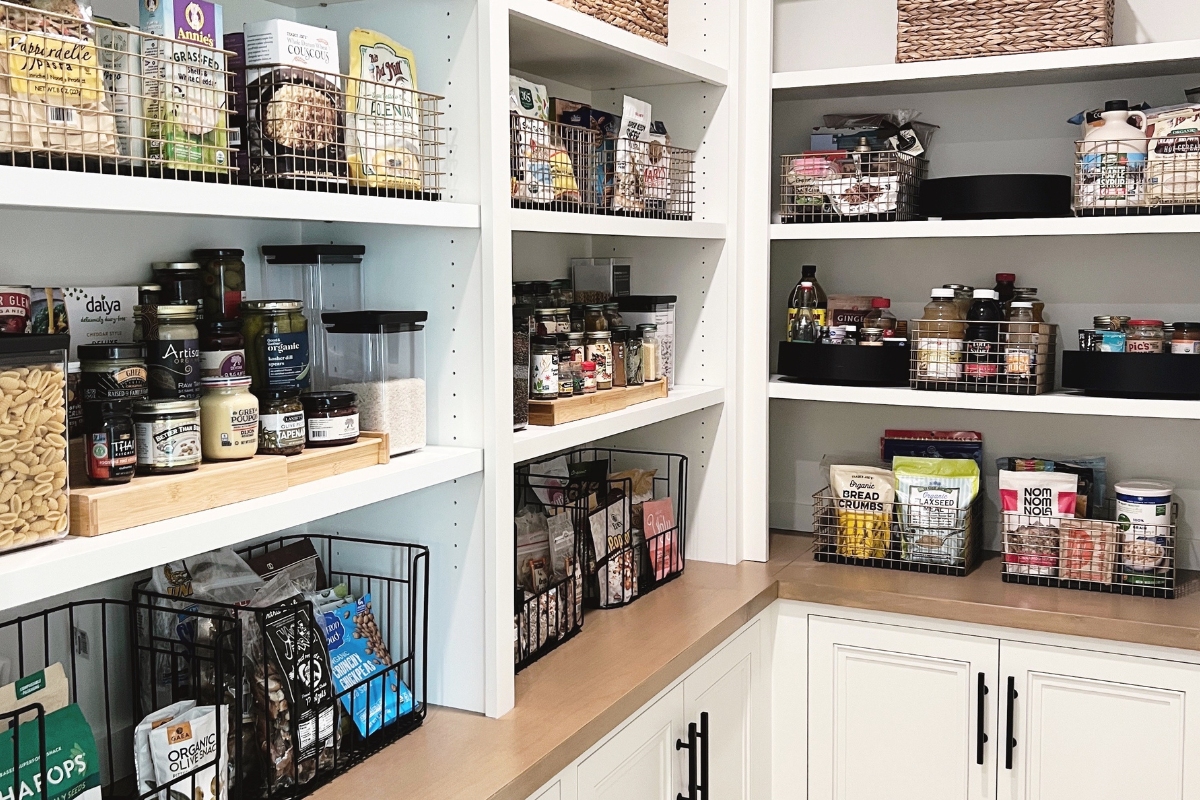
A Pantry Should Make Everyday Life Easier
A pantry can look beautifully organized and still be frustrating to use.
We see this often in family homes. Snacks are stored too high for the children who need them. Breakfast foods are spread across several shelves. Backstock gets mixed into everyday categories. Items disappear behind one another, and suddenly another box of something gets purchased because no one realized there were already two at home.
When we organize a pantry, we start with the routines rather than the containers.
How does the family make breakfast?
Who packs lunches?
What do the children reach for independently?
Which ingredients are used every day?
Where does bulk shopping tend to accumulate?
Once those questions are clear, the pantry can begin supporting the household instead of asking everyone to work around it.
Edit Before You Organize
Before we decide where anything belongs, we look at the full category.
Expired food, duplicates, products the family no longer eats, and specialty items that have been sitting untouched all take up useful space.
Editing first gives us a much clearer picture of what the pantry actually needs to hold.
It also helps prevent a common problem we see in client homes: buying more because existing items have become buried.
When you can see what you have, you are far less likely to purchase another package simply because the first one disappeared behind something else.
For a deeper seasonal edit, you can also read Simple Pantry Edit Routine.
Organize Around the Family’s Daily Routines
Once the pantry has been edited, we create categories based on how the household actually uses the space.
That may include:
- Breakfast
- Lunch preparation
- Snacks
- Baking
- Pasta and grains
- Canned goods
- Oils and condiments
- Beverages
- Backstock
The categories will look different in every home.
A family with young children may need a lower snack area.
A client who cooks frequently may need oils, grains, and everyday ingredients closest to the kitchen.
Someone who entertains often may need a completely different arrangement from a family primarily focused on weekday breakfasts and school lunches.
The pantry should reflect the life happening around it.
This is why Kitchen Organization Can Fail When It Ignores Daily Routines. A system may photograph beautifully, but if it creates extra steps every day, it will be difficult to maintain.
Make Everyday Items Easy to Reach
Prime pantry space should go to what the household uses most often.
Everyday breakfast foods should not be behind holiday baking supplies.
Lunch items should not require searching across three different shelves.
Frequently used ingredients should be visible and easy to return.
For families with children old enough to prepare their own snacks or breakfast, we often place appropriate items at a height they can reach independently.
That might mean cereal, oats, granola, or snacks on a lower shelf.
When the environment supports the routine, fewer steps are required from everyone in the household.
Use Products After the System Is Clear
Bins, baskets, turntables, risers, and airtight containers can all be useful.
But products should solve a specific problem.
We do not start by deciding that every pantry needs rows of matching containers.
We first determine what needs to live there, how much of it there is, and how frequently it is used.
Then we choose products that support those categories.
A deep bin may work well for individually packaged snacks.
A turntable can make bottles easier to access on a deep shelf.
A riser may improve visibility for cans or jars.
A basket may make sense for a category that looks visually busy but still needs to be easy to pull out.
The product follows the system.
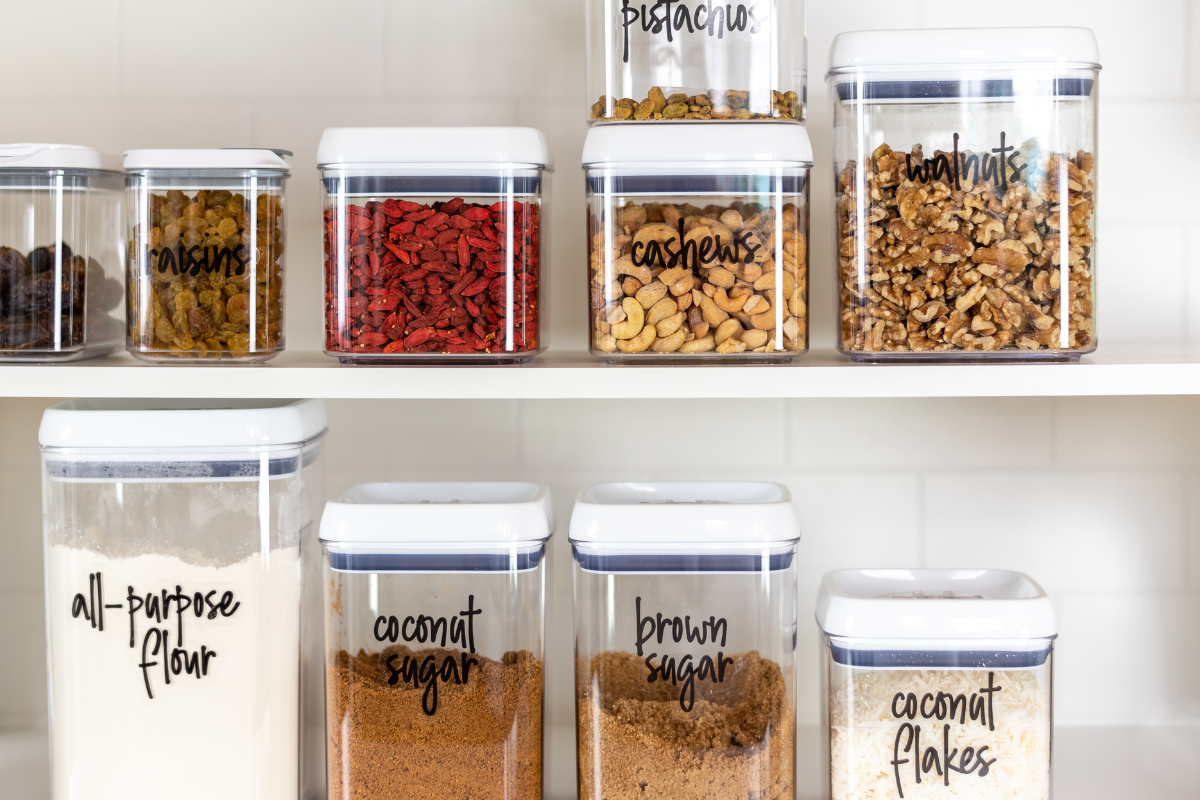
Decant Only Where It Makes Everyday Life Easier
Decanting can be useful, but it is not necessary for every pantry category.
For staples a family uses consistently, such as flour, sugar, oats, rice, or cereal, airtight containers can improve visibility and make it easier to see when something needs replenishing.
But transferring every item into another container can also create unnecessary maintenance.
We decide category by category.
If decanting makes the routine easier, we use it.
If the original packaging works better, we keep it.
The goal is not to create a pantry that requires constant upkeep to remain attractive.
It is to create one that feels easy to use.
Labels Help the Whole Household Maintain the System
Labels are useful because they make the decision about where something belongs obvious.
When groceries come into the house, the family, housekeeper, or anyone helping put things away can immediately see where each category belongs.
That consistency matters in busy households.
We keep labeling clear and straightforward so it supports the system rather than becoming decoration.
As categories change, labels can change too.
The pantry should be allowed to evolve with the family.
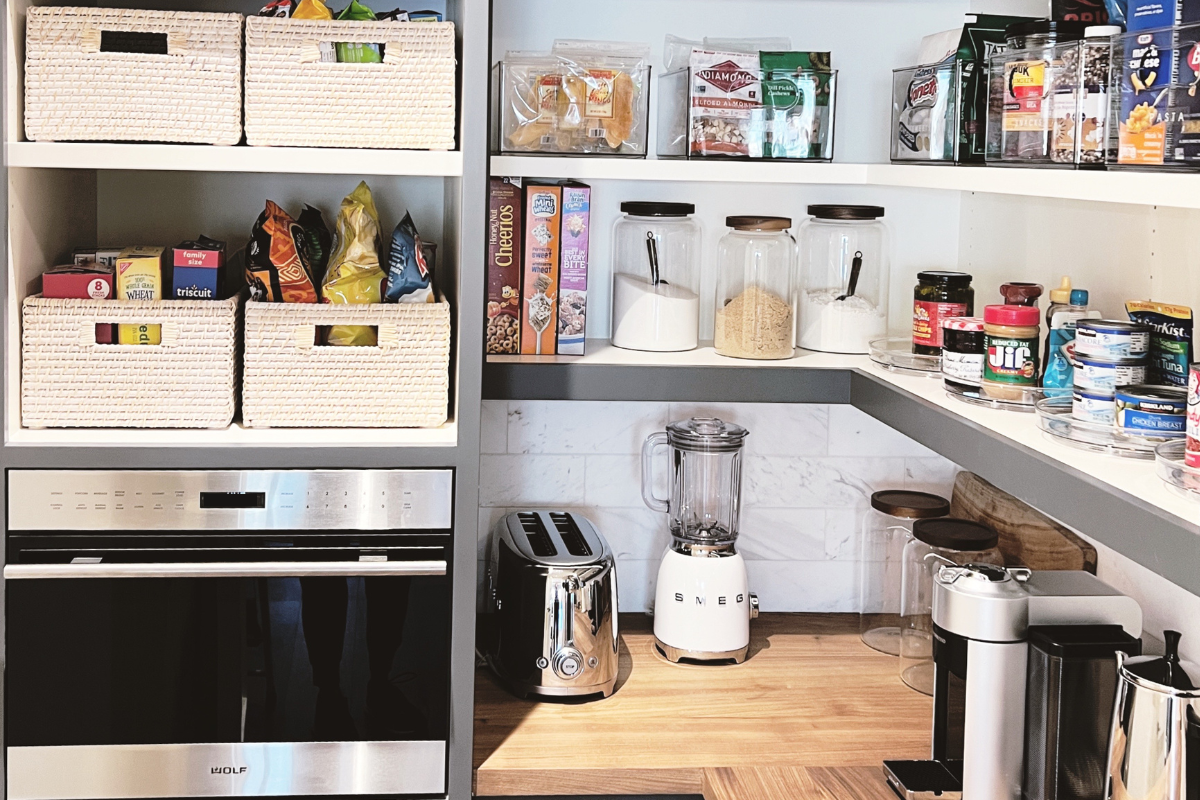
Separate Everyday Food From Backstock
Bulk purchasing can be convenient, but storing everything in the primary pantry often creates more visual noise than the family needs.
We usually separate what is actively being used from backup quantities.
The main pantry holds the items the household is reaching for now.
Additional packages can live in a defined backstock area, whether that is a higher shelf, nearby cabinet, garage storage, or another appropriate location.
This also makes restocking easier.
When an everyday category runs low, you know exactly where to check before adding it to the shopping list.
Give Children Access Without Giving Up the Whole Pantry
A child-friendly pantry does not mean every shelf needs to be accessible.
It means the categories children use independently are placed intentionally.
A lower basket might hold approved snacks.
Breakfast staples may sit at child height.
Other foods or categories the parents prefer to manage can remain higher.
The result is a pantry that gives children useful independence while still reflecting how the household wants food to be accessed.
Visibility Can Reduce Waste and Duplicate Buying
One of the most practical benefits of pantry organization is simply knowing what you already own.
When categories are crowded or spread across multiple places, food can expire unnoticed and duplicates accumulate.
Clear sightlines make it easier to:
- See what needs to be used
- Know what needs replenishing
- Avoid buying duplicates
- Notice when a category is becoming overstocked
- Use older items before opening new ones
This is one reason we value breathing room in a pantry.
Every inch does not need to be filled.
A little open space often makes the entire system easier to understand and maintain.
Build a Pantry That Can Change With the Household
A pantry is not static.
Children grow.
Schedules change.
Food preferences change.
Someone begins making smoothies every morning. A child starts packing a different lunch. Hosting increases. A new dietary need appears.
The system should be able to adjust without requiring a complete overhaul every time life shifts.
That is why we focus on flexible categories and clear zones rather than rigid arrangements.
Our Home Organizing service is built around this same philosophy: thoughtful editing first, followed by systems that support the routines actually happening in the home.
Frequently Asked Questions
I would keep FAQs on this post because pantry organization generates very practical search questions, and the answers fit naturally without making the article feel padded.
How do I keep my pantry organized long term?
Keep categories clear, make frequently used items easy to reach, and avoid allowing backstock to take over the everyday pantry. When the system reflects how your household actually uses the space, resetting it becomes much easier.
Should I decant everything in my pantry?
No. Decant only where it improves visibility, freshness, or ease of use. Some categories function better in their original packaging.
What should children be able to reach in the pantry?
That depends on the household. We typically place the foods children are allowed to access independently at an appropriate height, while categories requiring more involvement remain elsewhere.
Where should bulk pantry items go?
Keep everyday quantities in the main pantry and give overflow a separate, clearly defined backstock area. This keeps the primary pantry easier to use and makes it simpler to see when you actually need more.
A Pantry Designed Around Real Life
The most successful pantry is not the one with the most containers or the most perfectly arranged shelves.
It is the one that makes breakfast easier.
It supports lunch preparation.
Children can reach what they are meant to reach.
You can see what you own before buying more.
Groceries have obvious places to go when they come into the house.
And the system continues making sense after the organizing team leaves.
That is what we aim to create for our clients.
If your pantry or kitchen has stopped supporting the way your household actually lives, learn more about our Home Organizing service and how we create systems around your everyday routines.
Until next time,
Elissa


